

Smartshop is an enterprise solution for maintenance, repair, overhaul (MRO) service shops that automates and orchestrates shop floor operations like inspections, work scope determination, repair, assembly, quality assurance, and reporting.
My Role
UX Design Lead
Collaborators
Product Managers
Engineering Teams
UX Designers
Shop Floor Users
Skills Used
Design Leadership
Ethnographic Research
Problem-Solving
Whiteboarding
Wireframing
Prototyping
Usability Studies
Duration
Multiple Years
Abstract
I led the SmartShop UX team to digitally transform the shop floor processes for the GE Aerospace component repair network.
Our team replaced an outdated paper-based system with a cloud-based cutting-edge digital solution, tackling issues like lost documentation, inefficient part tracking, and inaccessible data.
The result? A streamlined digital platform that boosted efficiency, slashed turnaround times, and unlocked critical data insights.
The Problem
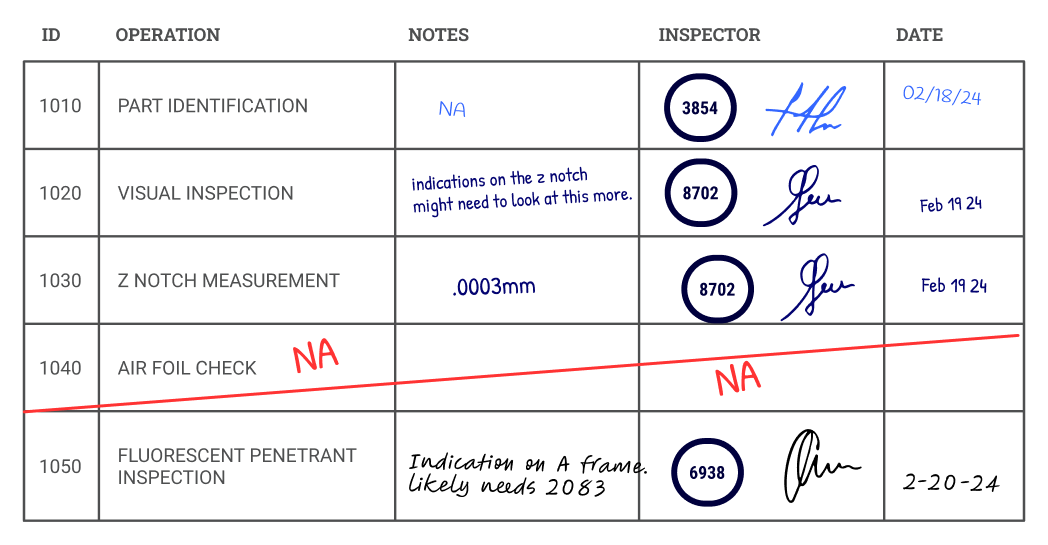
Picture this: a bustling aviation component repair shop drowning in paper. Paper packets full of valuable data getting lost or damaged, parts playing hide-and-seek across the floor, and handwriting that would make doctors blush.
It was a perfect storm of inefficiency, with critical repair data trapped on paper and customers left in the dark about their parts’ repair progress.
This paper chase wasn’t just slowing things down – it was putting FAA compliance at risk and leaving design engineers without crucial insights for improvement.
Here’s an example of what was on all that paper:
The Need
It was clear: the company needed to leap into the digital age. GE Aerospace needed a solution that could keep documentation safe and accessible for the FAA, track parts in real-time, bid farewell to handwriting woes, and turn repair data into gold for the design engineering team.
Plus, it had to keep customers in the loop and help meet those all-important contractual deadlines.
The Approach
It all starts with a conversation
The first step was to hop on a plane and travel to a component repair facility to meet the team. We stood back and we watched them work. We observed first-hand, the pain points they faced every day.
Understanding the business
Designing an ideal solution for shop floor users wouldn’t have made a bit of difference if the business outcomes weren’t met.
Our first goal was to understand the negative business impact of inefficient manual processes and the lack of insights into the data that was currently trapped on reams of paper.
Throughout the entire process of digitizing the current manual process, it was imperative that we took a balanced approach between what the business needed and creating an efficient task flow for end-users.
Understanding our users
One of our key takeaways from our many conversations with shop floor users was that SmartShop needed to be simple.
SmartShop needed to:
- Stay out of the users’ way. Our users are highly skilled technicians and engineers. They know what they need to do to get their work done.
- Be as simple as possible with no distractions. Users are working with extremely dangerous machines. Their software tool can’t be a distraction.
- Work effectively on any number of devices. There’s no way for us to know what devices will be used across the shops.
End Users as Partners
A distinct advantage of enterprise software is direct access to users. We took full advantage of the open-door policy at our shops and adopted a co-design approach with our shop floor team.
Countless trips across the world gave us ample opportunities for ethnographic observation, contextual inquiry, co-design sessions, and usability studies. This ensured our team knew exactly what the right approach would be and made sure whatever we designed worked for all of the shops within the global network.
The Solution
It all starts with a conversation
The result? A game-changer for the MRO network. SmartShop brought the shop floor into the 21st century. No more lost paperwork or hunting around the shop for hours looking for parts.
Shop leaders could now track operations with pinpoint accuracy, optimizing staffing and turnaround times. The cloud-based system unlocked a treasure trove of data for design engineers, helping them create more durable and reliable parts in the future.
Customers got the transparency they needed, and contractual deadlines became less of a nail-biter.
In the end, we didn’t just digitize a process – we saved countless labor hours and significantly reduced turnaround times.
Now that’s what I call a high-flying success! 🛫
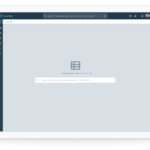
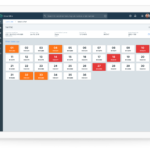
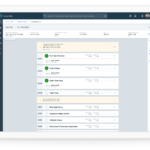
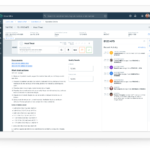
A few key highlights
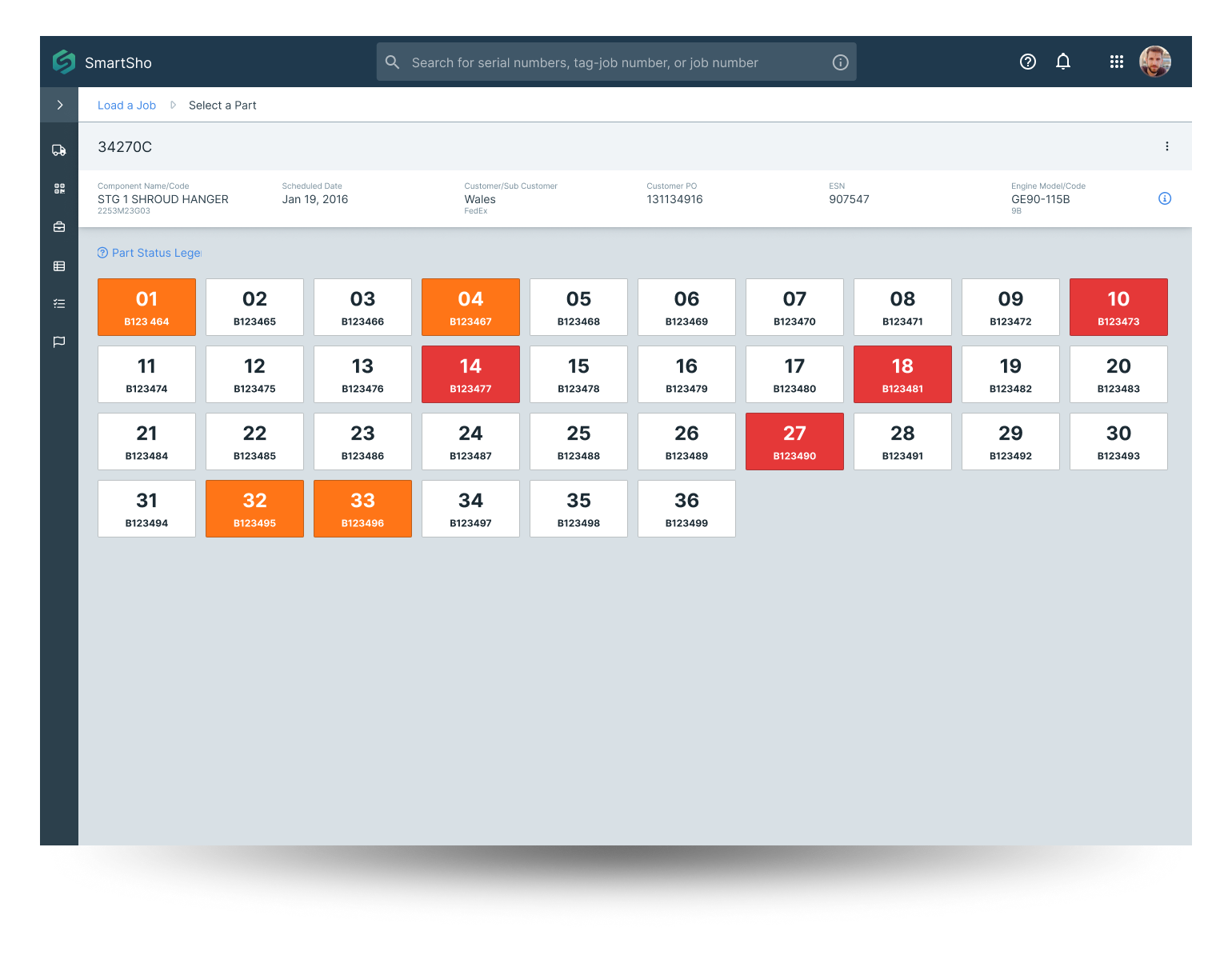
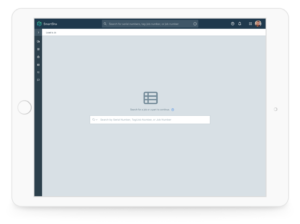
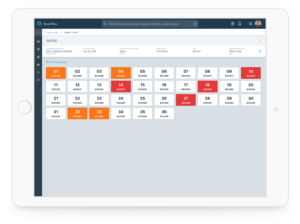
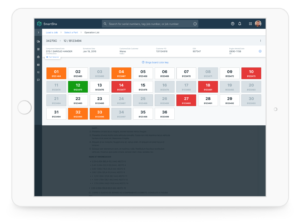
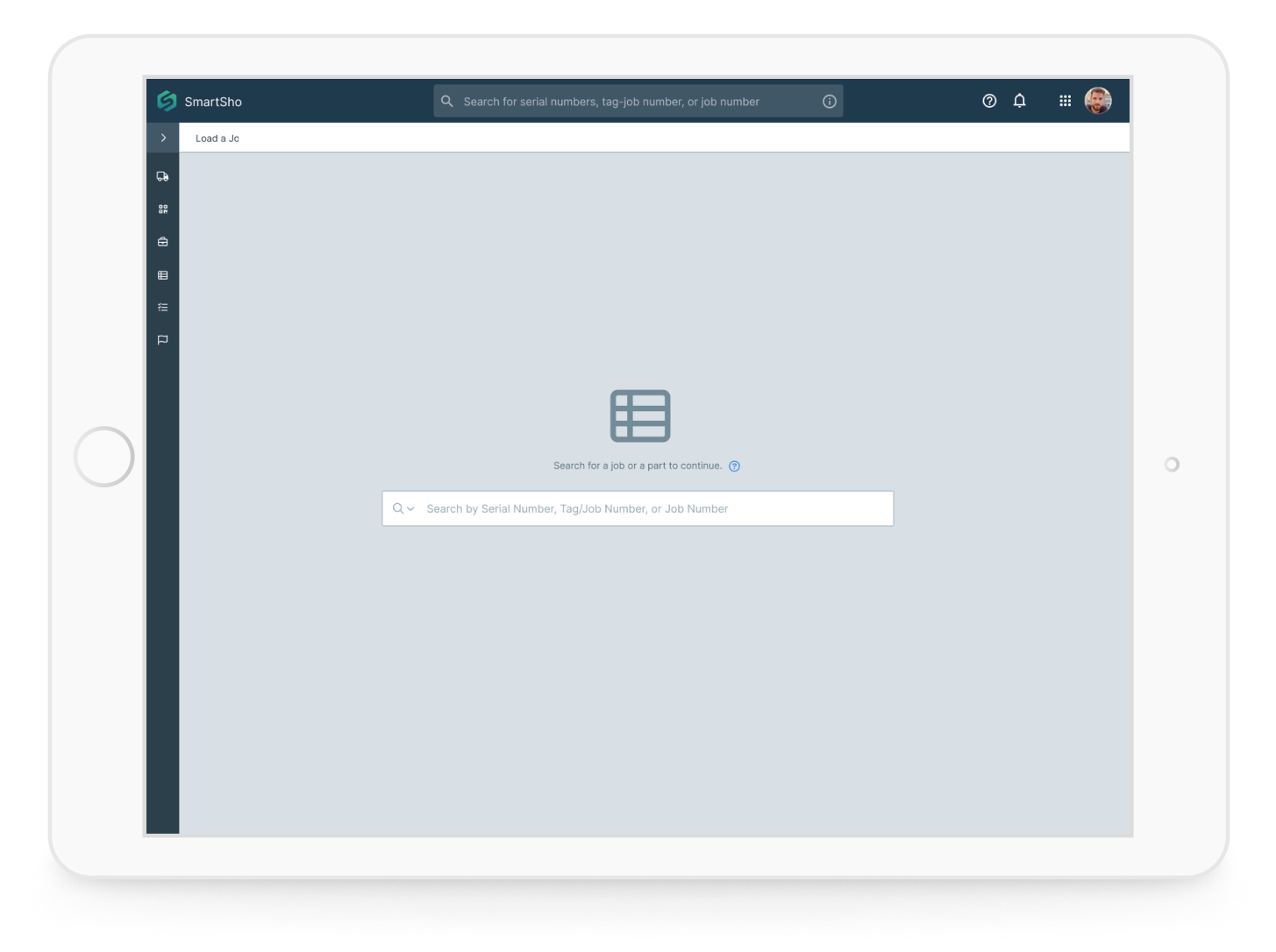
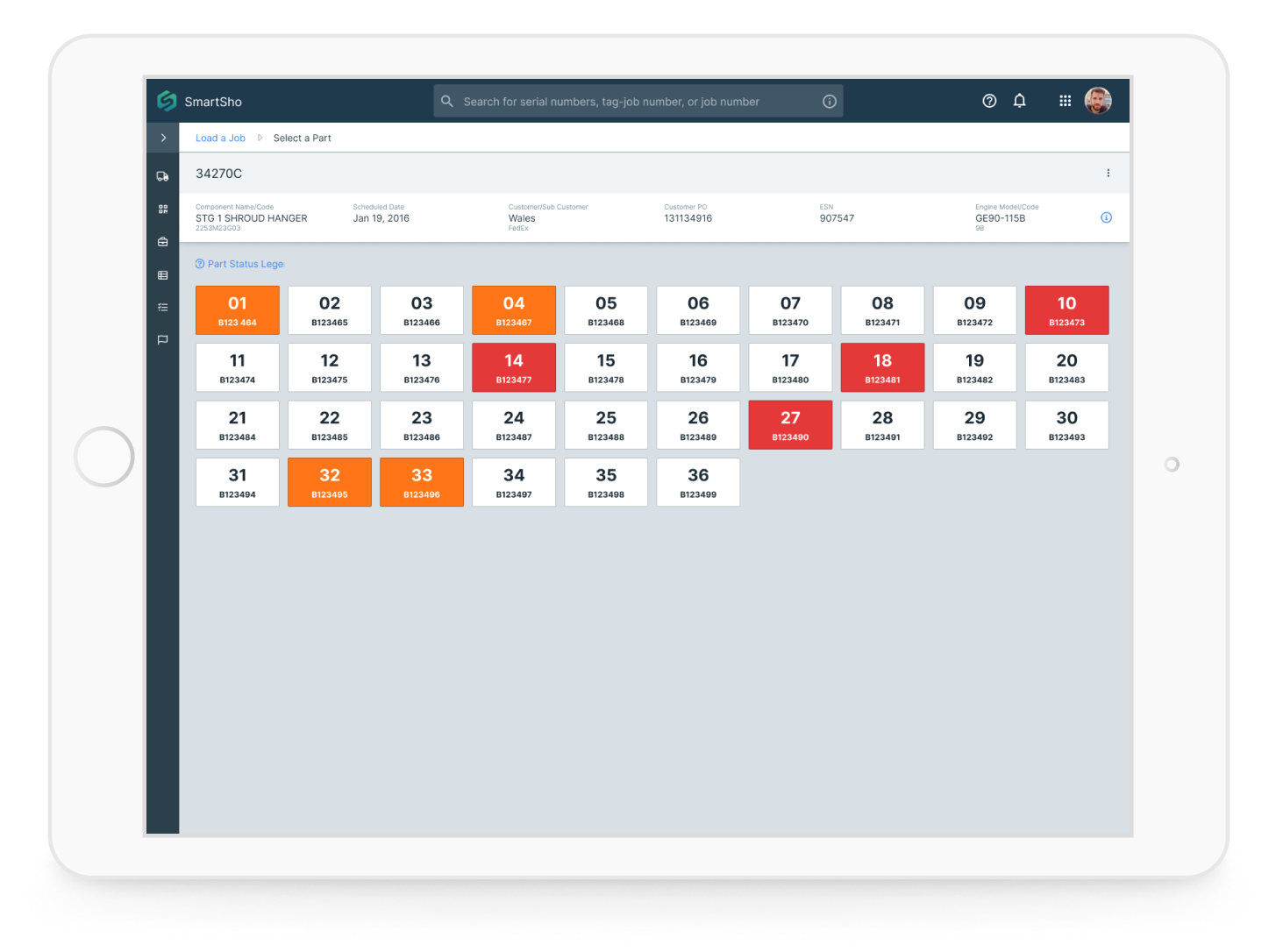
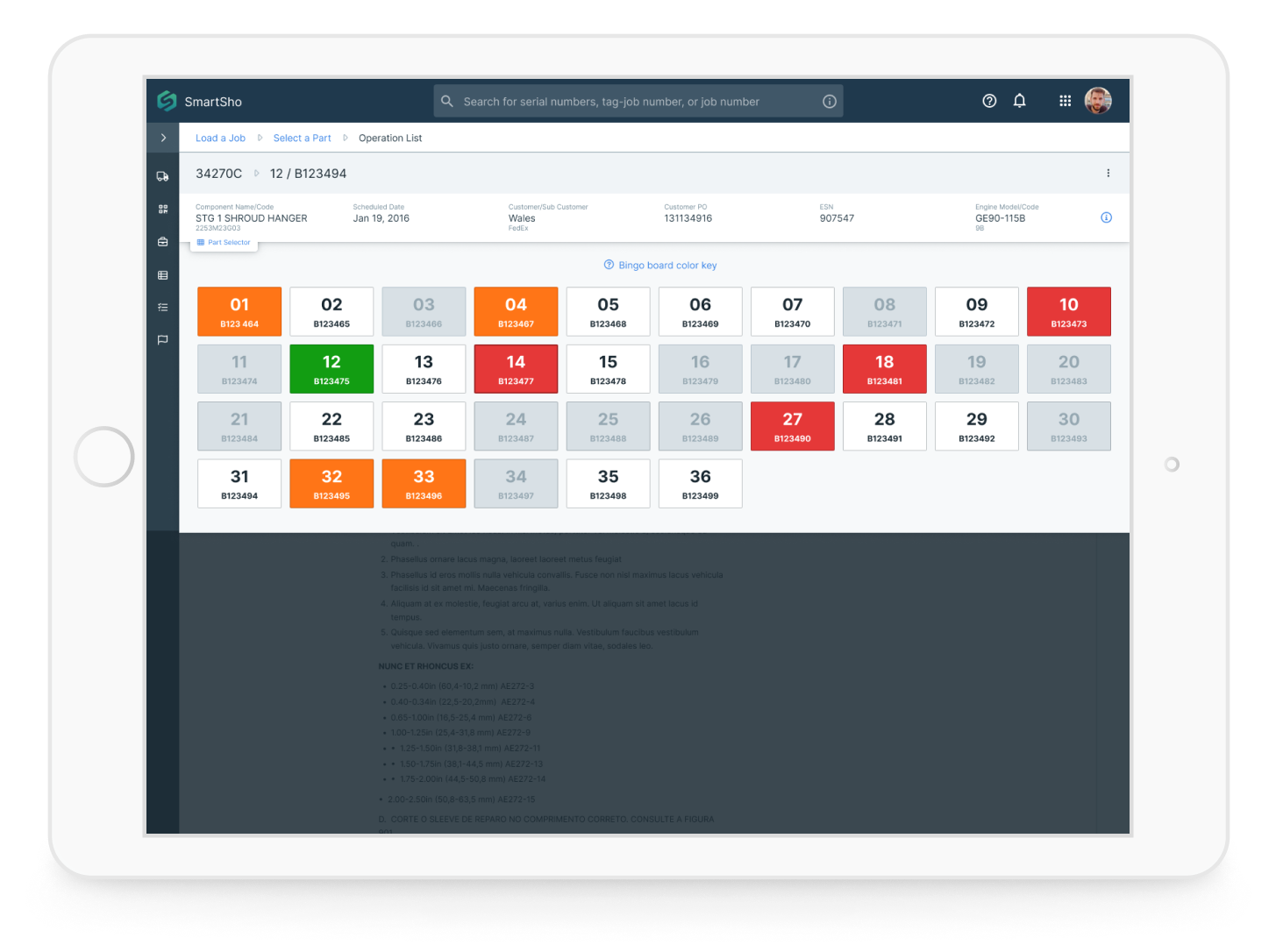
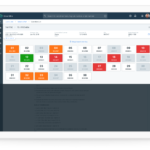
- The bingo board allowed inspectors to quickly select a part.
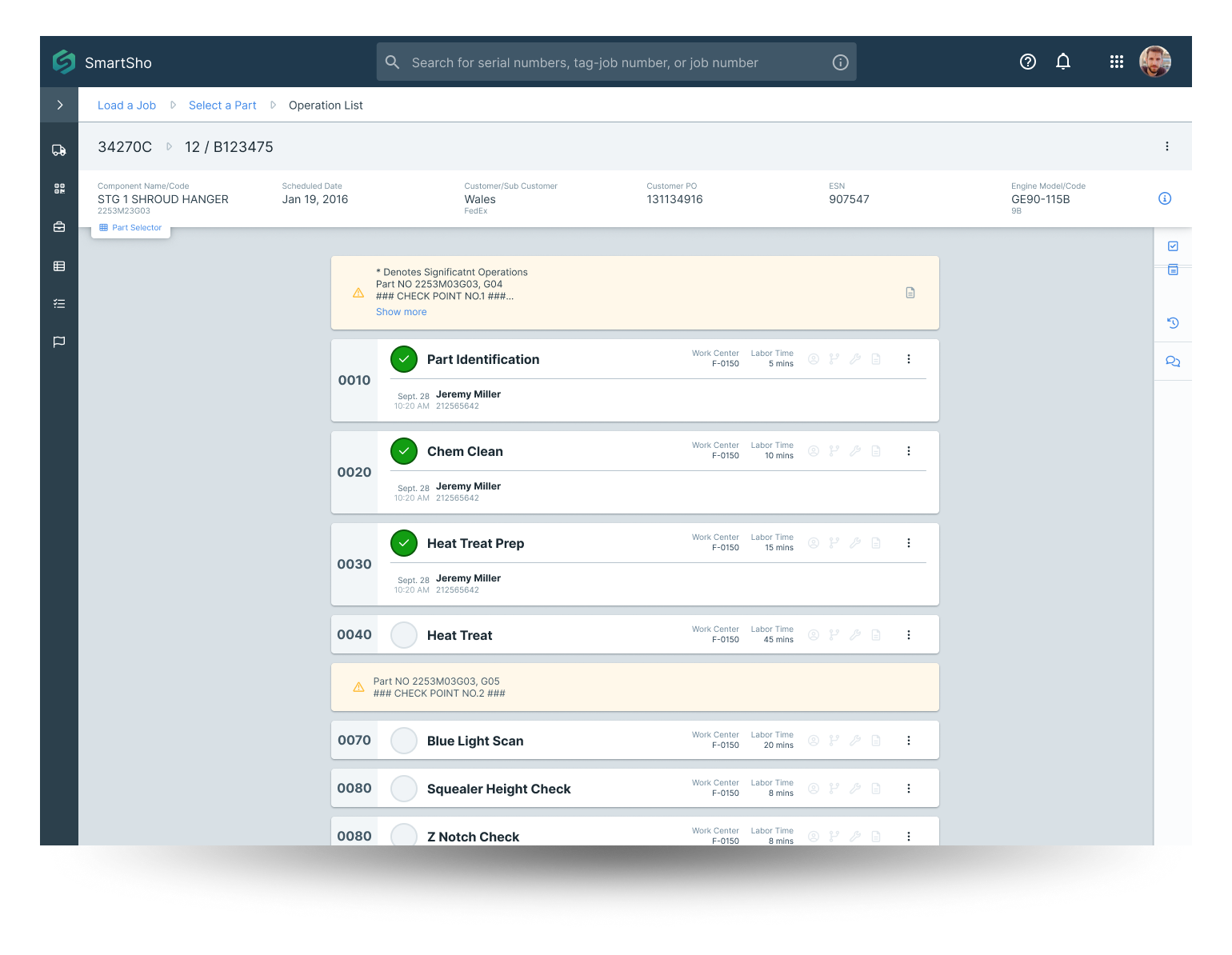
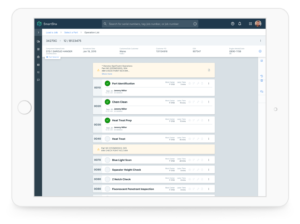
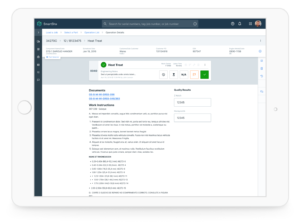
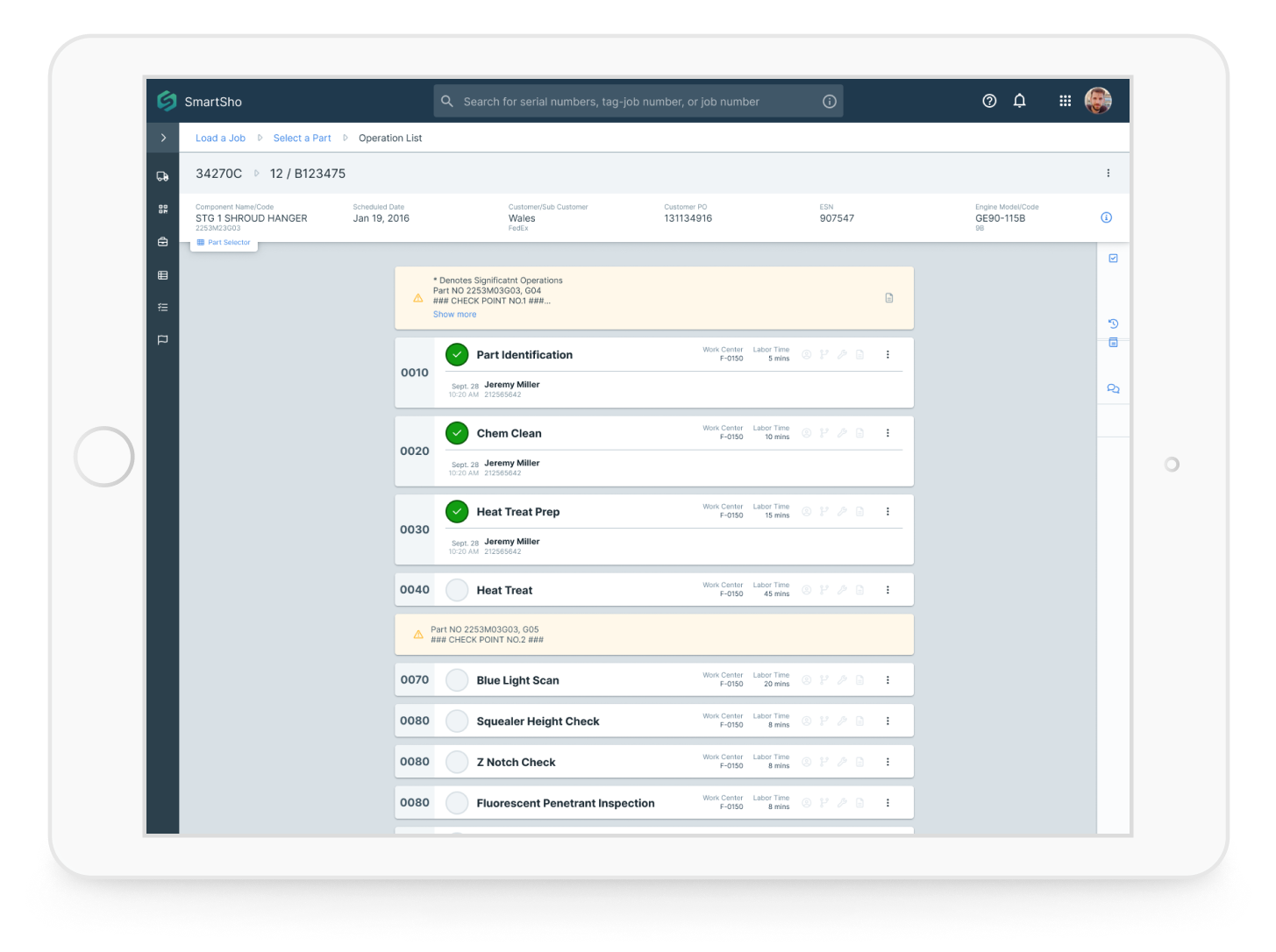
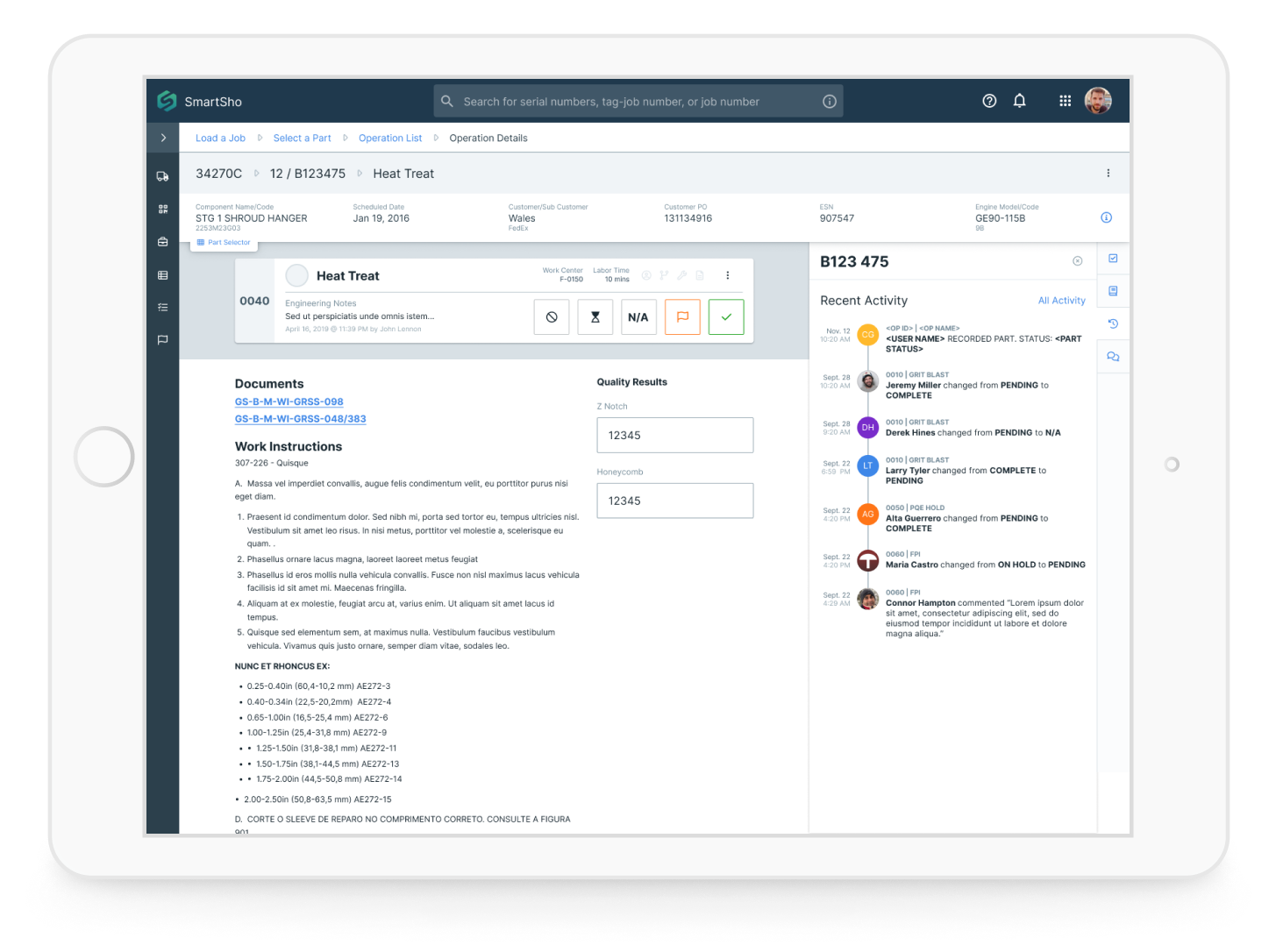
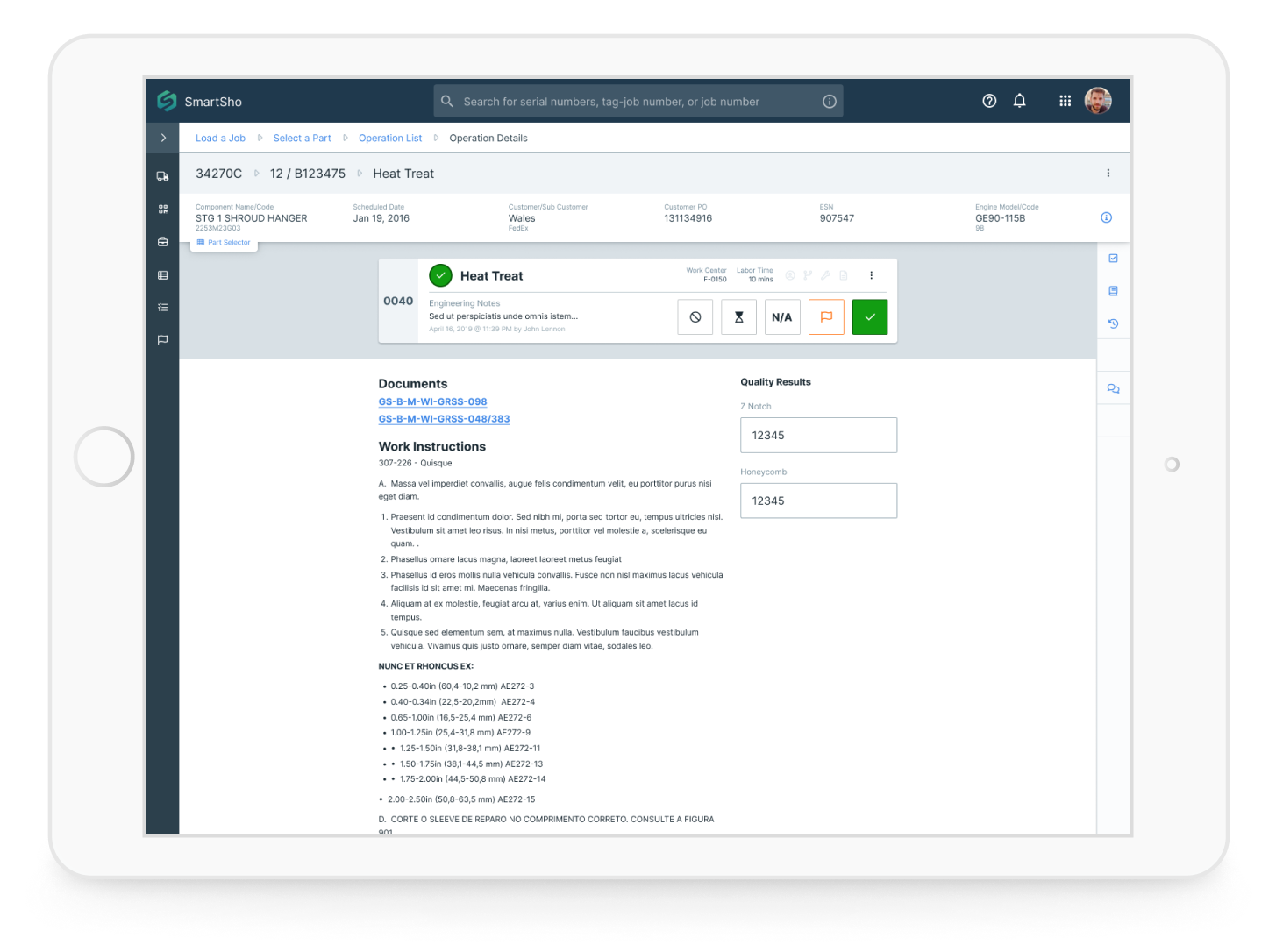
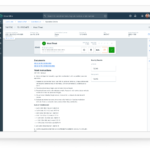
- A digital task list highlighted completed tasks, who completed them, and when.
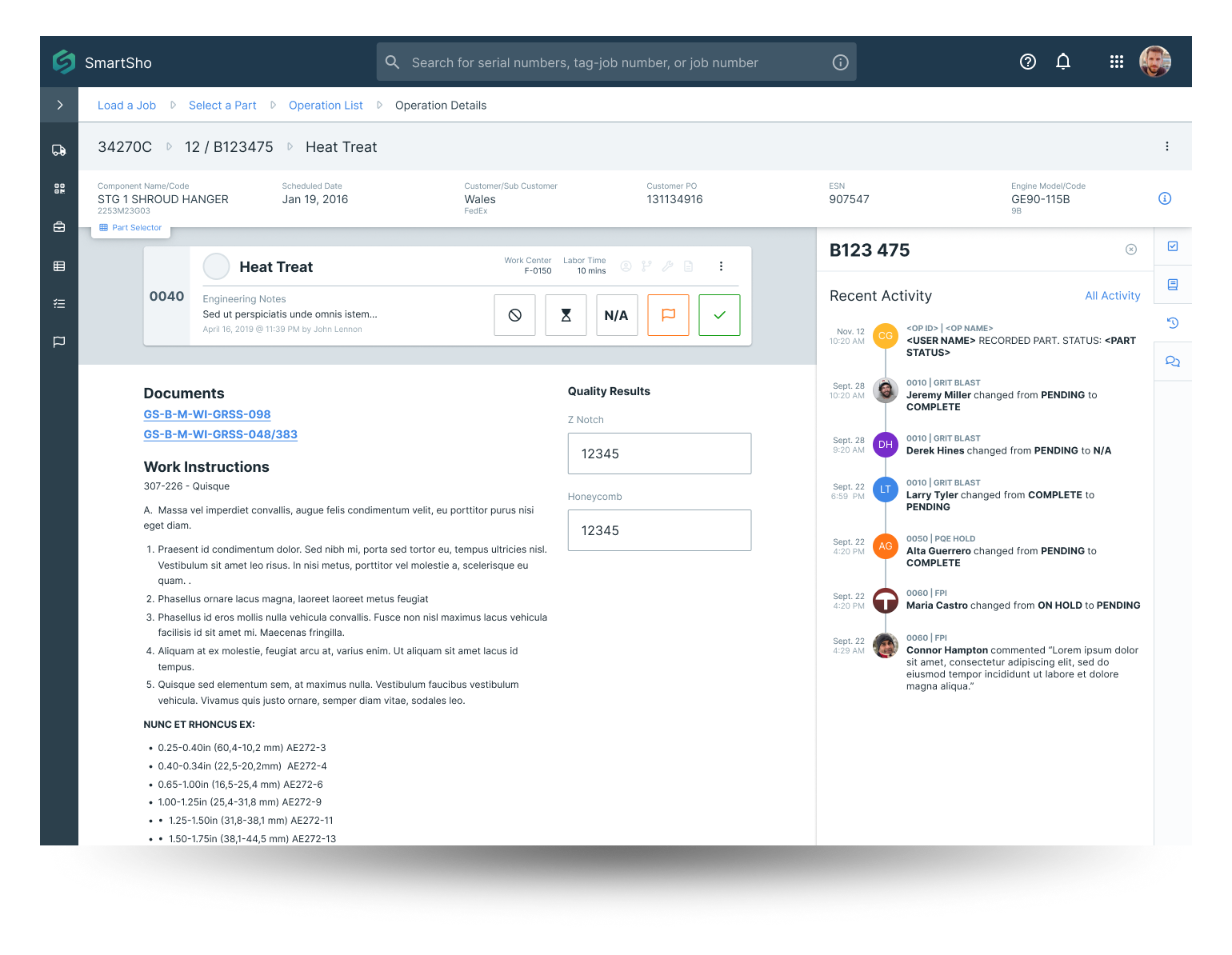
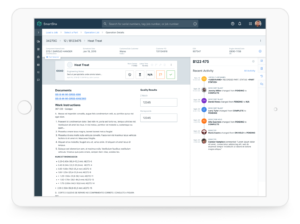
- The contextual drawer allowed users quick access to key part information
- The part switcher allowed users to quickly select a new part.
The Impact
Our digital transformation yielded impressive results across several key areas.
- Work Scoping: Reduced from 3 hours to 30 minutes per job, saving an average of 54,402 hours annually per shop.
- Final Inspection: Streamlined to instant digital review, saving 10,880 hours annually per shop.
- WIP Tracking: Cut daily management time by 67%, saving 5,200 hours yearly per shop.
Total Annual Labor Hours Saved: Over 80,000 per shop